
Indian stock markets experienced a second consecutive day of losses, with the Sensex tumbling 852 points, as crude oil prices surpassed USD 100 per barrel due to stalled US-Iran negotiations and escalating geopolitical tensions in West Asia.

Sun Pharmaceutical Industries reported strong consolidated numbers for Q4 FY26, with net profit rising 26 per cent year-on-year to 2,714 crore, despite continued weakness in its US generics business. Growth in innovative medicines and increased R&D investments are helping to offset these pressures.

The US-China rapprochement, however tenuous, is not without implications for India. Both China and Pakistan have become closer to the US, notes Ambassador T P Sreenivasan.

India's organised gold jewellery retail sector is projected to experience a 13-15 per cent year-on-year decline in sales volumes this fiscal, following an 8 per cent drop last year, due to elevated gold prices and a recent import duty hike, according to a Crisil report.

Equity benchmark indices Sensex and Nifty experienced a significant decline, primarily driven by a selloff in IT stocks due to concerns about AI disruption and renewed worries over global trade.

Indian benchmark indices Sensex and Nifty closed higher, with the Sensex climbing 355.90 points, driven by positive state election results and better-than-expected Q4 earnings, despite ongoing geopolitical concerns.
Gold prices experienced a significant drop in futures trading due to global selloff, inflation concerns, and a strong US dollar. Analysts predict a continued downward trend amid geopolitical tensions and potential rate hikes.

Indian benchmark indices, Sensex and Nifty, rallied significantly following a sharp decline in crude oil prices. This decline was triggered by US President Donald Trump's announcement of progress in negotiations with Iran towards a peace agreement, which led to renewed optimism in global markets.

Indian benchmark indices Sensex and Nifty surged over 1 per cent, with the Sensex jumping 918.60 points, driven by strong buying in banking and financial counters and a positive trend in global equities, fuelled by hopes of easing West Asia tensions.

Global trends and the Covid situation in China would drive the equity markets this week, which may also see volatility amid the scheduled derivatives expiry on Thursday, said analysts. According to analysts, investor sentiment remained subdued last week amid surging Covid cases in China and a few other nations. Also, stronger US growth data has cemented expectations of the Federal Reserve continuing with its hawkish stance, which added to the muted trend.

Hybrid mutual fund schemes attracted significant inflows of Rs 1.55 lakh crore in FY26, a 29 per cent increase, as investors increasingly opted for diversified investment strategies to navigate volatile market conditions and geopolitical tensions.

Indian markets on Dalal Street rallied sharply as easing tensions in the US-Iran conflict and stable oil prices boosted sentiment. Track Nifty50 and BSE Sensex performance and key global triggers.

Infosys has been recognised as the leading company for career growth in India, according to LinkedIn's '2026 Top Companies' list. The list, dominated by tech firms, consulting giants, and financial institutions, also features Accenture, Amazon, JPMorgan Chase, and SAP in the top five.

Indian equity benchmark indices Sensex and Nifty rebounded in early trade, driven by buying in blue-chip stocks and a positive trend in Asian markets, with domestic institutional investors providing crucial support.

Gold and silver prices saw a significant decline in the national capital, with silver falling by Rs 7,800 to Rs 2.43 lakh per kilogram and gold by Rs 1,500 to Rs 1.54 lakh per 10 grams, as investors booked profits amid persistent doubts over the durability of the West Asia ceasefire.

Bharat Forge reported modest Q4FY26 results but provided strong guidance, anticipating significant growth from its defence, aerospace, and data centre segments, with a projected 25 per cent revenue growth in Indian manufacturing for FY27, despite current high valuations.

Indian benchmark indices, Sensex and Nifty, saw a significant rebound in early trade, driven by a decline in crude oil prices. This drop followed US President Donald Trump's announcement of progress in negotiations with Iran towards an agreement to end the war, leading to a temporary pause in 'Project Freedom' to escort ships through the Strait of Hormuz. Track Nifty 50 and BSE Sensex performance and key global triggers.

Foreign universities are unlikely to gain major ground in India's higher education market in the near term, as students and families continue to prioritise return on investment over brand value in a highly price-sensitive sector.

As temperatures soar, booking queries have surged by double digits -- going up to 125 per cent -- for destinations like Kashmir, Shillong, Gangtok, Munnar, Leh, Rishikesh, Guwahati, Imphal, Kodaikanal and the Andamans.

'As re-industrialisation gathers pace across regions like Asia, Europe and the US, a wide range of products and inputs will see demand.'

New completions in India's office real estate sector fell by 36 per cent to 9.7 million square feet in Q1 2026, the lowest in four quarters, primarily due to developers adopting a cautious stance amid global uncertainties, particularly in Bengaluru, Hyderabad, and Mumbai. Despite this, office absorption increased by 20 per cent, indicating strong occupier demand.
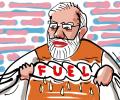
Following through announcements with enforcement of measures is key, as a run through recent Indian economic history shows, points out A K Bhattacharya.

India's exports recorded a 13.78 per cent increase to USD 43.56 billion in April, marking the highest monthly outbound shipments in over four years, primarily driven by petroleum products. However, the trade deficit widened to a three-month high of USD 28.38 billion due to a 10 per cent rise in imports.

India has expressed serious concerns about the West Asia crisis and its potential impact on energy supplies and maritime stability, urging BRICS nations to find practical solutions to geopolitical challenges and unilateral sanctions.

Equity benchmark Sensex extended its winning run to the fourth day running on Monday and reclaimed the 58,000-level, tracking firm global trends and fresh foreign fund inflows. Buying in index major Reliance Industries added to the momentum. The 30-share BSE benchmark climbed 545.25 points or 0.95 per cent to settle at 58,115.50. During the day, it jumped 600.42 points or 1 per cent to 58,170.67. The broader NSE Nifty advanced 181.80 points or 1.06 per cent to 17,340.05.

The Reserve Bank of India (RBI) has projected that crude oil prices will average USD 85 per barrel and the rupee will weaken to 94 against the dollar by FY27, according to its bi-annual Monetary Policy report.

Disciplined investors who ignore short-term fear build significant long-term wealth, notes Ramalingam Kalirajan

As Prime Minister Narendra Modi urges Indians to travel less, rising fuel prices are already changing driving habits.
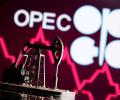
The United Arab Emirates has announced its decision to withdraw from OPEC and the wider OPEC+ alliance, effective May 1, 2026, signalling a significant policy-driven evolution in its long-term energy strategy aimed at aligning with domestic economic goals and increased production investment.

Indian equity markets experienced a significant downturn, with the Sensex and Nifty plummeting due to rising crude oil prices, geopolitical tensions in West Asia, and continuous foreign fund outflows.
The United Arab Emirates has announced its decision to withdraw from OPEC and the wider OPEC+ alliance, effective May 1, 2026, signalling a significant policy-driven evolution in its long-term energy strategy aimed at aligning with domestic economic goals and increased production investment.

Dabur India's shares rose 3.7 per cent after reporting in-line Q4FY26 results, driven by a healthy 10 per cent growth in its India business, despite some analysts remaining cautious about future execution.

India should not stay on the margins of this initiative. There should be a serious debate about what would be in India's best interests asserts former foreign secretary Shyam Saran.

Indian oil marketing companies are incurring significant losses, selling petrol at a Rs 14 per litre loss and diesel at Rs 18 per litre, as elevated global crude oil prices, exacerbated by the West Asia crisis, outpace capped retail fuel rates, according to rating agency Icra.

Aviation fuel prices for domestic airlines remain unchanged, providing stability for local carriers, while commercial LPG and 5-kg cylinders see a significant rate hike due to rising international energy costs.

Met Gala 2026 is almost here and if there's one thing we know, it's that Indian celebs don't just attend, they make fashion history.
Indian equities on Dalal Street saw volatility as global market trends and oil price hike impacted investor sentiment. Track Sensex, Nifty50 movement and key market drivers for Apr 23, 2026.

Nayagam PP, career counsellor and founder of EduJobs360, explains how traditional engineering choices are being replaced with flexible, future-ready career paths that align with industry requirements.
Indian markets on Dalal Street rallied sharply as easing tensions in the US-Iran conflict and stable oil prices boosted sentiment. Track Nifty 50 and BSE Sensex performance and key global triggers.

Inflation data and global trends would be the major driving factors for the equity markets this week which after a record-breaking run took a breather in recent trades, analysts said. The overall market sentiment remains positive, supported by improving economic data and earnings but higher valuations can trigger bouts of profit booking, they said further. During the last week, which the 30-share BSE benchmark rose by 175.12 points or 0.30 per cent.
